At some point, every project demands a name.
I was creating a dedicated GitHub organization to house my homelab work: infrastructure, automation, security models, identity flows. It needed something more deliberate than “gregs-lab.”
I landed on Ontologic.
Partly because I like the way “onto” reads as two words: on to — as in, moving forward. On to logic. On to innovation.
But the name runs deeper than wordplay.
In philosophy, ontology is the study of being — what exists, what is real, what can be said to be.
Those questions have followed me for many GitOps years.
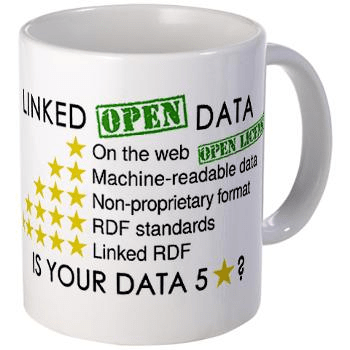
My background with Linked Data and knowledge representation so shape how I think about systems. In RDF and OWL, an ontology is not abstract metaphysics. It is a formal specification of entities, classes, and relationships. It defines what exists in a domain and how those things relate to one another.
It is machine-verifiable reality.
In RDF:
- Entities are identified.
- Relationships are explicit.
- Assertions are structured.
- Truth is modeled.
You don’t “kind of” know something. You describe it precisely. You formalize it. You constrain it. You reason over it.
That mindset bleeds directly into how I build infrastructure.
When I configure host key signing, I am asserting:
This machine is what it claims to be.
When Vault signs a client certificate, I am asserting:
This identity is authorized to act.
When audit logs are written, I am asserting:
This event occurred.
In both philosophy and RDF, ontology asks:
What exists? What relationships are valid? What can be trusted as true?
My homelab must answer the same questions.
What is a host?
What is an identity?
What is trust?
What is proof?
SSH host key signing replaces assumption with formal verification.
Client key signing replaces static configuration with time-bound assertions.
Vault becomes the authority that reasons over those assertions.
In other words, Ontologic is my recognition that infrastructure is a knowledge system.
Servers, keys, certificates, identities — they’re all entities in a graph. Their relationships determine what is allowed to happen. And like any well-defined ontology, the clearer those relationships are, the stronger the system becomes.
That’s where the name came from.
Not just from moving “on to” something new.
But from the desire to define, explicitly and rigorously, what is.
 Reburn Report
Leave a comment