I recently joined the OpenClaw Discord and sat in on a community call last week. The level of engagement was higher than I expected. There were a few deeply technical contributors, but the majority of participants were non-technical or semi-technical people trying to figure out how to get started with LLMs, agents, and automation without drowning in complexity.
That mix made the discussion more interesting to me.
Below are the most interesting tools, ideas, and projects that came up.
A Community That’s Actually Building
One thing that stood out immediately was participation. People asked real questions and shared real experiments. One participant in particular wasn’t very technical by his own admission, but he’s been working with AI tools for a couple of years and was actively helping others.
More importantly, he’s building a real business using AI, not just demos or “hello world” agents. More on that later.
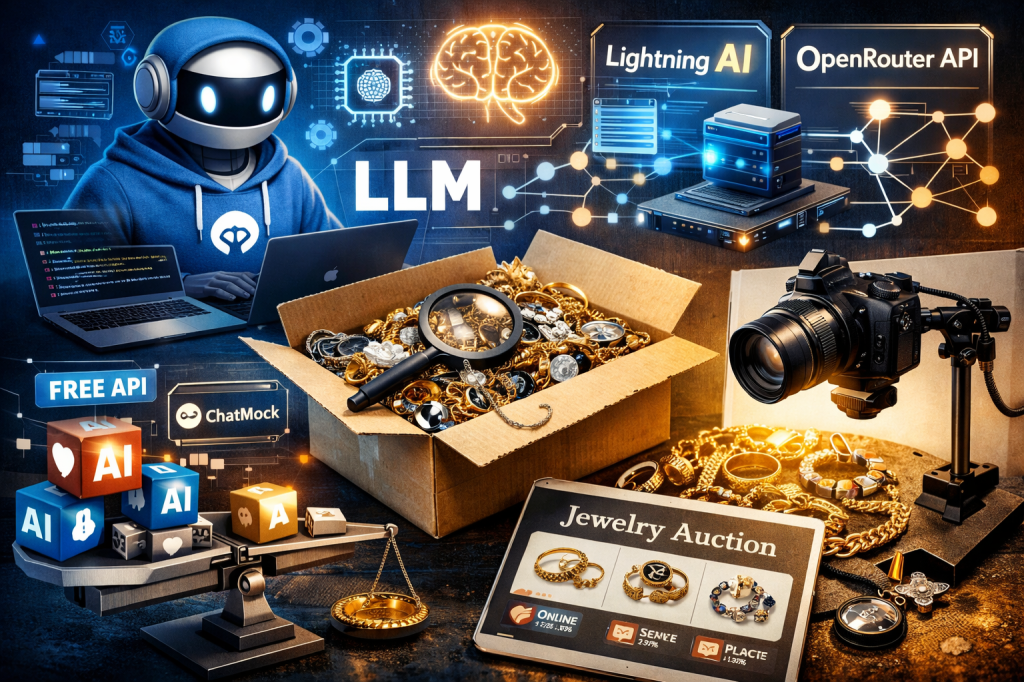
Lightning AI: A Serious Free-Tier Option for LLM Access
Early in the call, Lightning AI came up, which led me to this page:
https://lightning.ai/models?section=allmodels
Lightning AI positions itself as an IDE with AI baked in, but the key takeaway is their model access offering:
- Access to top open and closed models
- One account
- Pay by the token
- No credit card required
- 30 million free tokens per month
OpenClaw supports registering multiple LLM providers and automatically switching models when limits are reached. In theory, Lightning AI slots neatly into that architecture.
OpenClaw will rotate models as usage caps are hit. What’s less clear is whether OpenClaw dynamically selects the “best” model based on prompt intent. Some tools do this explicitly. I’m not convinced OpenClaw does this natively yet.
OpenRouter vs OpenClaw Model Routing
OpenRouter came up in the discussions and I’ve since used it personally.
OpenRouter:
- Has a free tier
- Provides API access
- Automatically routes prompts to models it deems appropriate
That last part is important to me. OpenRouter explicitly markets prompt-based routing. OpenClaw, as far as I can tell, focuses more on availability and failover than semantic routing. That’s not a knock—just a distinction.
OpenCode: Another Free-Tier AI Development Tool
Another project mentioned was OpenCode zen.
I haven’t used it yet, but it appears to offer:
- A free tier
- Access to some models
- A developer-friendly workflow
It’s worth watching, especially if you’re trying to minimize costs while experimenting.
ChatMock: Clever, Risky, and Probably Against Policy
One of the more controversial tools mentioned was an opensource project called ChatMock.
The idea is simple:
- Use OpenAI-compatible API spec
- Forward requests to ChatGPT itself
- Avoid OpenAI API fees
In practice, this means treating ChatGPT’s free UI access as a backend API.
People openly discussed:
- Registering multiple ChatGPT accounts
- Cycling through them to exhaust free usage limits
- Wiring OpenClaw to ChatMock for “free” LLM access
Let’s be clear: this almost certainly violates OpenAI’s terms of service. It’s clever, but it’s also fragile and legally questionable. Use at your own risk.
That said, the fact that people are even discussing this highlights how strong the demand is for low-cost or free LLM access.
Moonshot AI: “Best Model” Claims (Unverified)
Moonshot AI was mentioned multiple times, with people claiming it had “the best model.”
No specifics. No benchmarks. No links.
I haven’t looked into it yet, so take that claim for what it’s worth: anecdotal hype until proven otherwise.
LLM-API-Key-Proxy: Self-Hosted OpenRouter
Another project mentioned was LLM-API-Key-Proxy, essentially a self-hosted OpenRouter.
Key idea:
- One API
- Multiple LLM providers
- OpenAI- and Anthropic-compatible endpoints
- Intelligent load balancing
- Provider translation
If you don’t want to rely on a third-party routing service, this approach makes sense—especially for teams deploying OpenClaw in production.
AI Meets Real Commerce: The Jewelry Resale Project
Now for the most interesting part of the call.
One community member is building an AI-powered jewelry resale business called Caspers. I really liked that he is using next.js, hosted on vercel, built using AI.
Here’s how it works.
The Supply Side
- He buys bulk jewelry from thrift stores like Goodwill
- Jewelry is sold in auction-style bulk boxes
- A typical box:
- ~5 pounds of mixed jewelry
- Around $500 per box (prices vary)
- These boxes include:
- Costume jewelry
- Occasionally real gold and silver pieces
For context:
- Gold: ~$5,011.80 USD per ounce
- Silver: ~$90.95 USD per ounce
Even a few genuine pieces can materially change the economics.
The AI Workflow
After purchasing a box:
- Each item is photographed individually
- Clean backdrop
- Proper lighting
- Consistent positioning
- Images are fed into AI models to:
- Identify the item
- Classify materials
- Generate metadata
- Produce product descriptions
- Listings are published to:
- His own site
- eBay
- Potentially Facebook Marketplace
This is exactly the kind of small, unglamorous, profitable use case AI is actually good at.
No hype. No “AGI.” Just automation applied to a boring, repeatable workflow.
Final Thoughts
The OpenClaw Discord isn’t just theory or tooling debates. People are actively:
- Chaining together free and low-cost LLM providers
- Pushing the boundaries of API access
- Building real businesses with AI-driven automation
- Helping each other get started and innovate
Some ideas are solid. Some are risky. A few probably don’t comply with terms of service.
But that’s the point. This is what early-stage ecosystems actually look like.
If you’re interested in OpenClaw, agent orchestration, or using LLMs without burning cash, the Discord is worth paying attention to—not for polished answers, but for real-world experimentation.
 Reburn Report
Leave a comment