Defining User Stories
Title: <value> as a <role>
Description: As a <role> I want to <value> in order to <business value>
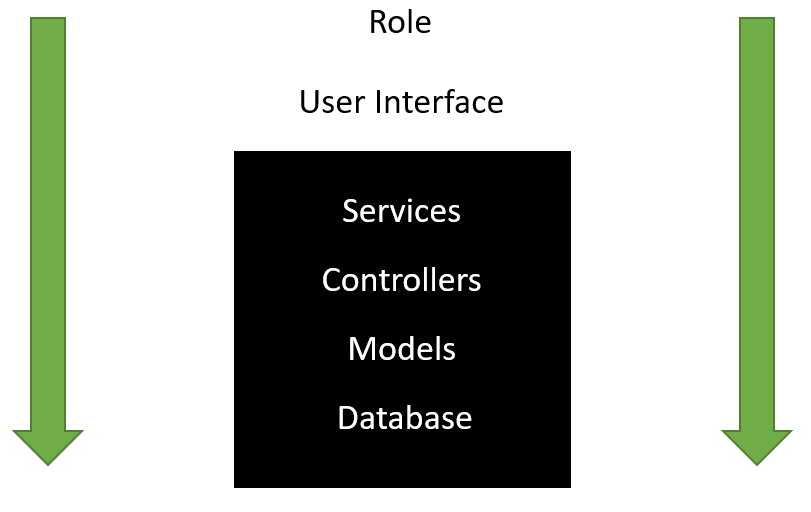
- User stories determine scope (the what)
- Think from the stakeholder’s perspective
- Write in a way that all stakeholders understand
<Role>
- Mention stakeholders by name or team when necessary
- Consider defining Personas for your product(s)
- Fictional – but accurately represent a product user
- Add enough relevant fiction to humanize the persona, but just enough
<Value>
- Use the customer’s DSL (Domain Specific Language)
- Avoid relative words (fast, big, bright, loud)
- Be concise
- Remove noise (distractions & fluff)
- Communicate important and relevant information
<Business value>
- Conversation is driven from the highest level of business value
- The business value will eventually be realized through a User Interface of some sort but this is typically not the focal point of the conversation.
- The user is not purvey to HOW and WHY a business chooses to deliver features
Pop the why stack
There are exactly 3 reasons to create a user story:
- Increase revenue
- Protect existing revenue
- Decrease cost
One of these three reasons will be obscured in the <value> section of the user story description. De-obfuscate the value by asking why (popping the why stack) and de-prioritize user stories when you cannot determine the value.
Defining Scenarios
- Communicate the WHAT, not HOW or WHY
- Use Gherkin syntax (GIVEN-WHEN-THEN)
- Describe the behaviors of the feature NOT reproduction steps
- Begin with the THEN when you don’t know where to start
- Remove the notion that you are creating a web, mobile or desktop application (HOW)
- We are creating business value
 Reburn Report
Leave a comment